
How to Prevent Key Scratches from Zipper Pockets in Soccer Training Pants


Table of Contents
- Why Keys Scratch Gear in Zipper Pockets
- Know Your Pockets and Zippers
- Fabrics: What Your Training Pants Are Made Of
- Zipper Types: Coil, Molded, and Metal
- Pocket Layouts and Scratch Risk
- Choosing Soccer Training Pants That Protect Your Keys and Your Gear
- Prioritize Smart Pocket Design
- Spec the Right Zipper Construction
- A Quick Example: Two Pairs, Two Outcomes
- How to Use Existing Zipper Pockets Without Scratching Anything
- Trim the Keyring for Training
- Separate Keys from Screens and Plastic
- Use Soft Barriers and Micro-Organizers
- Take Advantage of Built-In Key Loops
- DIY and Customization for Serious Players
- Adding or Upgrading an Exposed Zipper Pocket
- Building a Dedicated Inner Key Sleeve
- Upgrading a Waistband Pocket
- Care, Cleaning, and Zipper Maintenance
- Wash Smart to Keep Pockets Smooth
- Protect and Lubricate Zippers
- Dry and Store for Long-Term Performance
- A Real-World Scratch-Proof Setup
- FAQ
- Is it ever a good idea to put a full keyring in a zipper pocket?
- Can I safely carry a car key fob in my soccer training pants?
- How do I know if a pair of pants has “good enough” pockets for carrying keys and a phone?
- References
When you spend as much time around high-performance gear as I do—whether it is tuning a Kawasaki for a track day or dialing in kit for a late-night training session—you start to see the same pattern: tiny details decide whether your equipment feels dialed or distracting. In soccer training pants, one of those deceptively small details is what you do with your keys.
Zipper pockets are a game changer for keeping essentials secure, but if you toss metal keys in with your phone, car fob, or even just the inner face of the pocket, you can end a season with scratched screens, chewed-up plastic, and worn-out fabric. The good news is that with the right gear choices, carry strategy, and a bit of care, you can enjoy the security of zipper pockets without sacrificing the rest of your kit.
As a performance specialist who lives in technical fabrics—on pitches, trails, and race paddocks—I will walk you through how to prevent key scratches without giving up the convenience of zipper pockets.
Why Keys Scratch Gear in Zipper Pockets
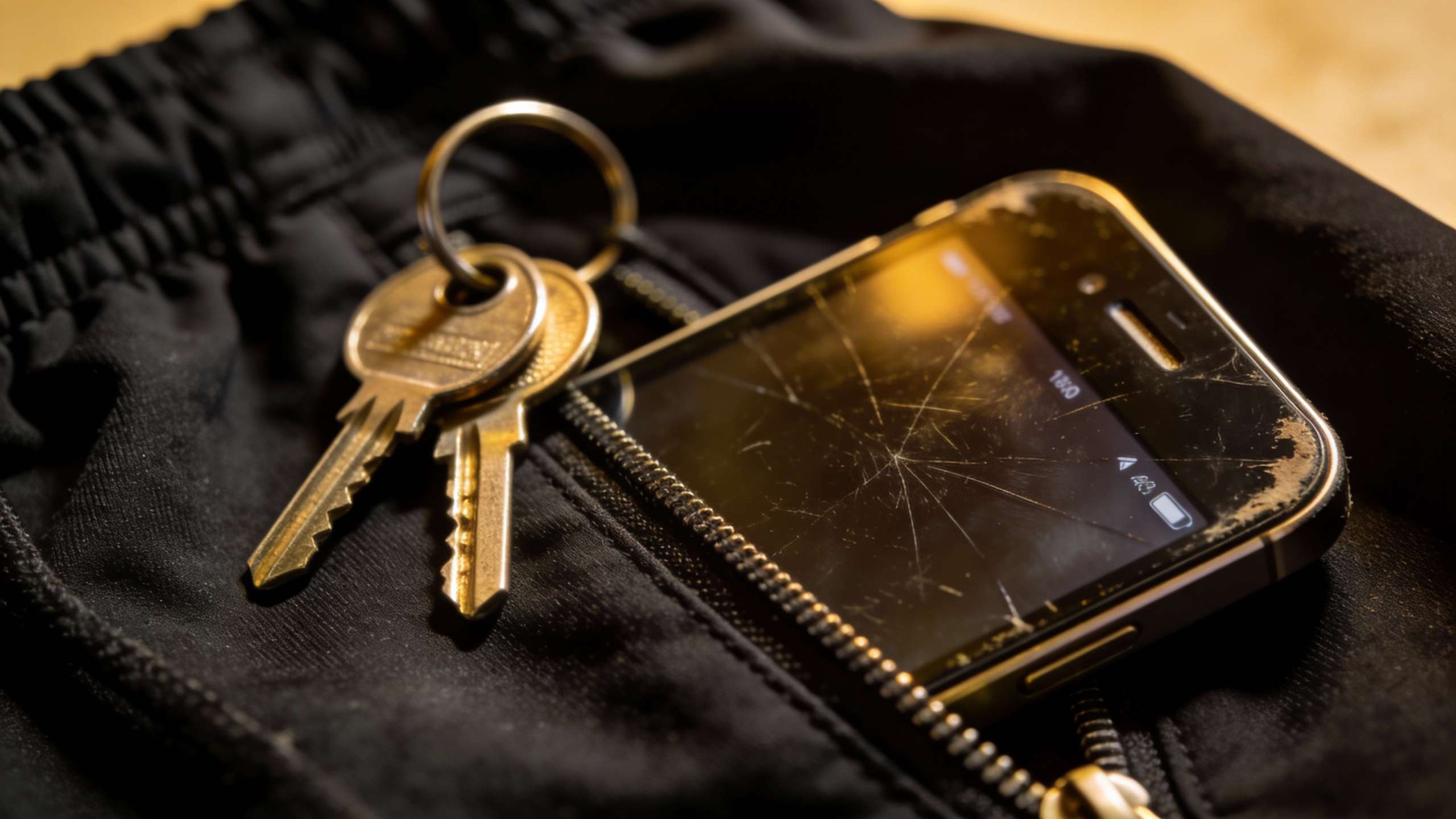
The problem is simple mechanics. Your keys are hard, edged pieces of metal or plastic. Your phone screen, key fob casing, and pocket fabric are comparatively soft. Once you zip everything into a tight space and start sprinting, cutting, and sliding, those hard edges act like a file.
A running-gear guide from MierSports describes zipper pockets as “secure, stable storage” for keys, IDs, cards, and small devices, especially when they are placed on the rear waistband near your center of gravity. That stability dramatically reduces bounce, but it does not change the basic equation: every step is contact between objects in that pocket. Over thousands of strides in a training session, a key tip riding against a phone screen or plastic fob has plenty of opportunity to leave its mark.
The risk is not only for the items you carry. Soccer training pants are typically built from synthetic blends—polyester, nylon, and spandex—similar to the athletic shorts analyzed in a University of Illinois blog on women’s athletic shorts. Those fibers are durable and abrasion-resistant, but they still pill, snag, or thin out when metal hardware grinds in the same spot over and over. The result is a shiny patch on the pocket bag, tiny holes, or distortion around the zipper seam.
There is also a comfort angle. A piece on zipper styles in workout pants from Shbamovement notes that zipper placement can cause irritation when hardware sits against the skin. Invisible zipper pockets are usually gentler because they are low profile and well integrated into the fabric. Keys amplify that same issue: a bulky keyring pressing against your thigh inside a tight zipper pocket is a recipe for hot spots and distraction.
The root of the problem is not the zipper itself; it is the combination of pocket design, what you carry, and how you move. To fix it, you need to understand all three.
Know Your Pockets and Zippers
Fabrics: What Your Training Pants Are Made Of
Most soccer training pants use the same kinds of performance fabrics found in modern athletic shorts and leggings. A detailed overview of women’s athletic shorts from the University of Illinois highlights three core fibers:
Polyester is the workhorse. It is durable, resists shrinking and wrinkling, and wicks moisture well.
Spandex (also called elastane or Lycra) provides the stretch and recovery that let your pants move with you instead of against you.
Nylon is smooth and strong, often used where abrasion resistance matters.
Manufacturers blend these fibers to balance moisture management, stretch, and strength. For example, a polyester–spandex blend gives you both wicking and flexibility. From a scratch-prevention point of view, these synthetics hold up better than cotton, but once the inner pocket fabric pills or thins out, a sharp key can start leaving real damage.
Zipper Types: Coil, Molded, and Metal
Not all zippers are created equal. A design guide on closures in activewear from FittDesign breaks zippers into three main material types:
Nylon coil zippers are lightweight, flexible, and common in high-performance sportswear.
Plastic molded zippers are bulkier and more durable, often used in outerwear.
Metal zippers are very durable and typically reserved for premium products and bags.
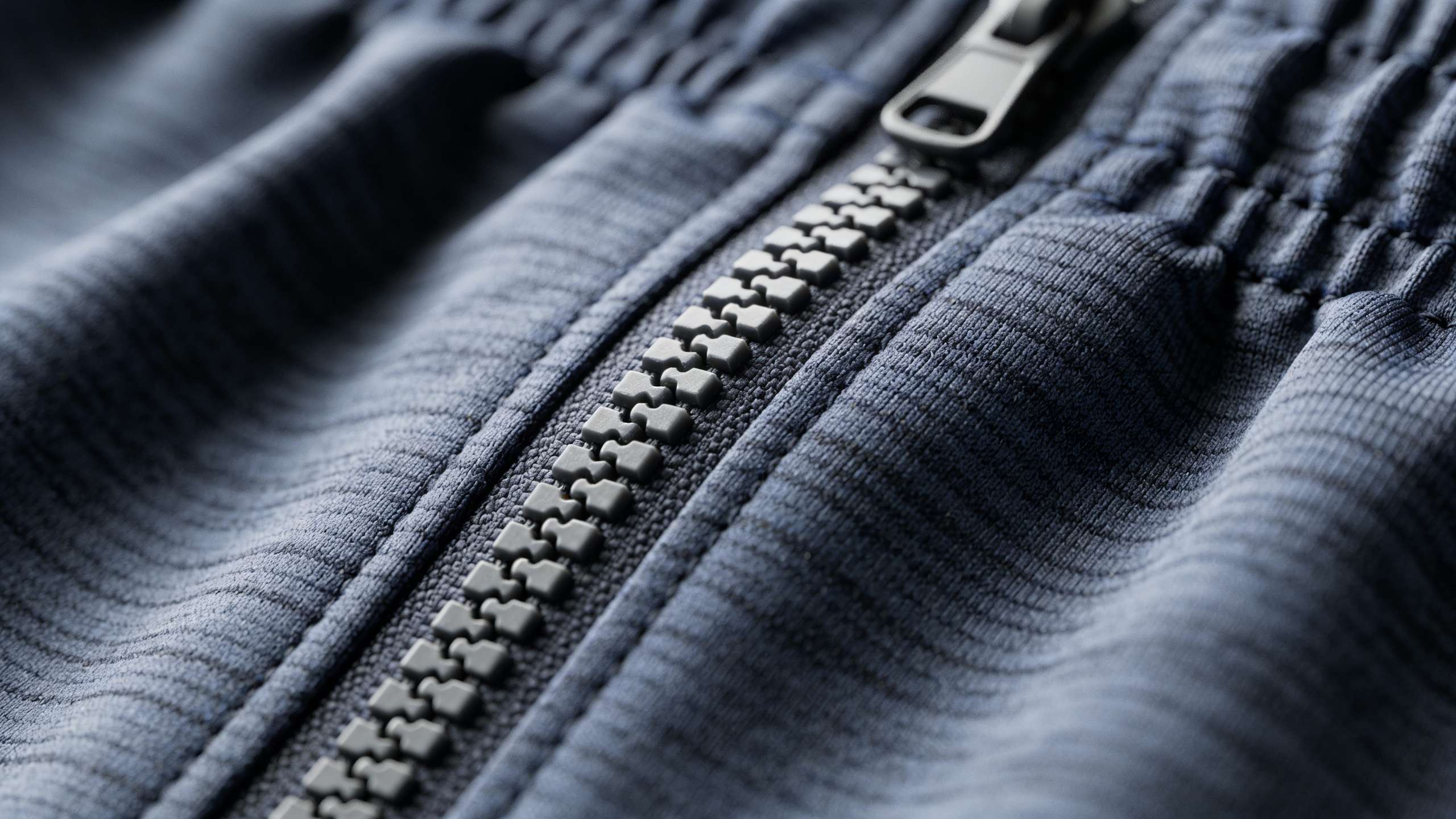
For soccer training pants, pocket zippers are almost always nylon coil because they are light and low profile. That is what you want. The zipper teeth themselves are not usually what scratch your gear; it is the metal you put inside the pocket. Coil zippers also tend to be smoother, which matters because a sticky zipper encourages you to yank and twist, pulling your pocket fabric into awkward positions and potentially grinding keys harder against whatever they share space with.
Pocket Layouts and Scratch Risk
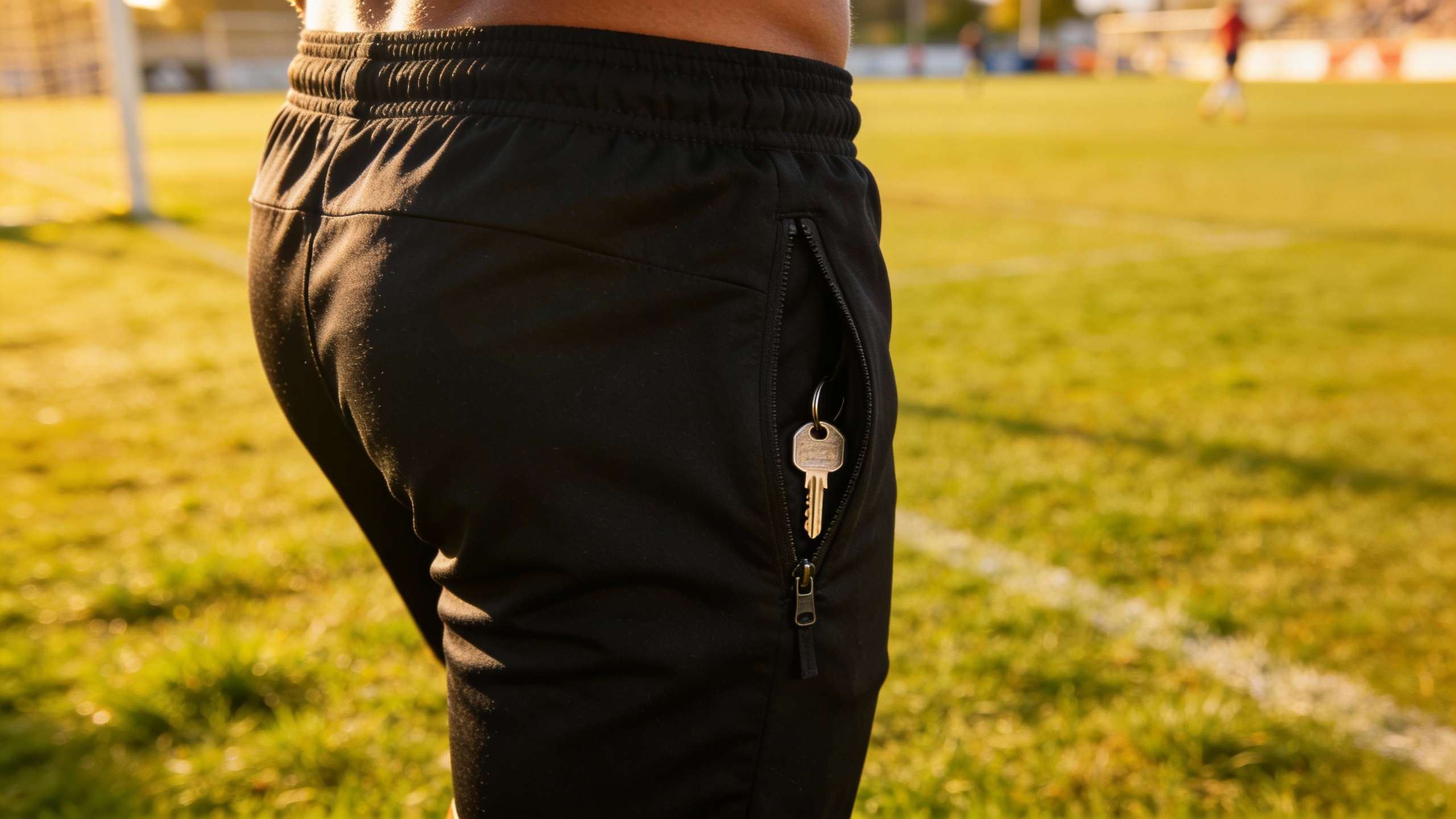
Pocket layout changes everything. A MierSports running-shorts article emphasizes rear waistband zipper pockets lined with sweat-resistant fabric, placed near your center of gravity, to minimize bounce and protect electronics. Compare that to a loose side pocket where keys flop around every time you accelerate.
Here is how common pocket styles rank in terms of scratch risk when you carry keys.
|
Pocket style |
Typical location |
Scratch risk with keys |
Best for |
|---|---|---|---|
|
Open side pocket |
Hip, no closure |
High if keys share space with a phone |
Casual wear, warm-ups with nothing fragile inside |
|
Side zipper pocket |
Hip, vertical or slanted zipper |
Medium; depends on how crowded the pocket is |
Keys only, or keys plus soft items like a cloth |
|
Rear waistband zipper pocket |
Center back at waistband |
Lower, especially with sweat-resistant lining |
Single key or slim fob, energy gel, ID, small card |
|
Internal key sleeve or stash |
Small pocket inside main pocket |
Lowest, keeps keys isolated |
Keys separated from phone or other electronics |
That last option—the small internal sleeve—is what many “smart” running shorts and leggings use to keep a house key from rubbing against anything important. Unfortunately, as a research article on pockets and gender inequality points out, a lot of athletic wear, especially for women, still lacks adequate pockets altogether. Part of the reason we end up stuffing everything into one zipper pocket is that the garment gives us no better option.
Choosing Soccer Training Pants That Protect Your Keys and Your Gear
Prioritize Smart Pocket Design
When you are shopping for training pants, look at pocket design with the same scrutiny you would give to frame geometry on a performance bike. Based on how performance shorts are described in retail and running-gear guides, there are a few patterns worth seeking out.
Look for pants with at least one dedicated zipper pocket that is not your main hand pocket. A rear waistband zipper pocket, as highlighted in the MierSports piece, is ideal for a single key or slim fob because it stays stable near your center of gravity. The less your keys bounce, the less they can grind against anything else.
Pay attention to lining. Some back zipper pockets are lined with sweat-resistant or even waterproof material to protect electronics. That barrier also helps protect your pants because moisture plus metal can lead to staining and fabric degradation over time.
Check depth and width. If a pocket is just barely big enough for a phone, adding a keyring forces those objects into constant contact. You want enough volume that your key can sit in its own “lane,” or enough structure that you can easily keep keys in one pocket and your phone in another.
Finally, test access. You need to be able to reach your keys without contorting your hand. If getting to the zipper requires a wrestling match, you are more likely to shove everything into a single easy pocket and accept the scratches.
Spec the Right Zipper Construction
You do not need lab equipment to evaluate the zipper, but the closures guide from FittDesign and the zipper-style overview from Shbamovement give some useful principles.
Favor low-profile coil zippers on pockets rather than chunky molded teeth. Coil zippers slide more smoothly and sit flatter against the body, so you are less likely to feel the slider hard against your thigh when there are keys in the pocket. Many invisible zipper pockets use coil zippers that hide in the seam; Shbamovement notes that invisible pocket zippers are typically gentle on skin and rarely cause irritation, which is exactly what you want in a pocket that occasionally holds metal.
Check the zipper pull. Oversized metal pulls look rugged but can become another hard object in a crowded pocket. Smaller pulls, or pulls with a soft fabric tab, are friendlier when you are carrying keys.
Look for zipper garages or fabric covers at the top. That extra flap protects your skin from the slider, and it also gives you a smoother inner surface if your keys end up riding high in the pocket.
A Quick Example: Two Pairs, Two Outcomes
Imagine two players on the same training pitch. One wears tapered pants with deep open side pockets. He tosses his full keyring and phone into the right pocket before warm-up. By the end of a 90-minute session, everything has bounced freely: the phone screen shows fresh micro-scratches, and the pocket fabric is stretched and shiny where the key teeth rode.
Another player pulls on pants with a rear waistband zipper pocket lined with sweat-resistant material and a small internal sleeve. She clips a single house key into that sleeve and leaves her phone on the sideline or in a separate pocket. The key stays pinned near her lower back with almost no movement. Same workload, very different wear pattern.
That second setup is the goal. With the right pants, you are halfway there before you even leave the locker room.
How to Use Existing Zipper Pockets Without Scratching Anything
Maybe you already own training pants you love and you are not going to replace them just to manage keys. You can still dramatically reduce scratch risk by changing how you carry.
Trim the Keyring for Training
For most sessions you do not need a full house-and-car-and-mailbox collection. Pull off the bare minimum—often a single house key—and make that your dedicated training key. Store the rest in your bag or in your car. This simple move turns a heavy, jagged bundle into a much smaller and easier-to-manage object.
From a physics point of view, cutting the mass and length of your key setup reduces the force and leverage it can apply to anything it rubs against. Fewer edges, less damage.
Separate Keys from Screens and Plastic
The easiest way to prevent scratches is to stop letting keys share space with fragile surfaces. Whenever possible, keep your keys and your phone in different pockets entirely. Many athletic shorts and pants, like those described in the Illinois shorts overview and the MierSports article, are designed with multiple pocket types: open hand pockets for quick access and zipper pockets for secure storage. Reserve one zipper pocket for keys only, and stash your phone in another pocket or on the bench while you train.
If you have no choice but to carry both in the same pocket, position them intentionally. Place the phone screen facing your leg, keys behind it, and hold the phone in your hand until the last possible moment. Minimizing the time they spend bouncing together is still better than nothing.
Use Soft Barriers and Micro-Organizers
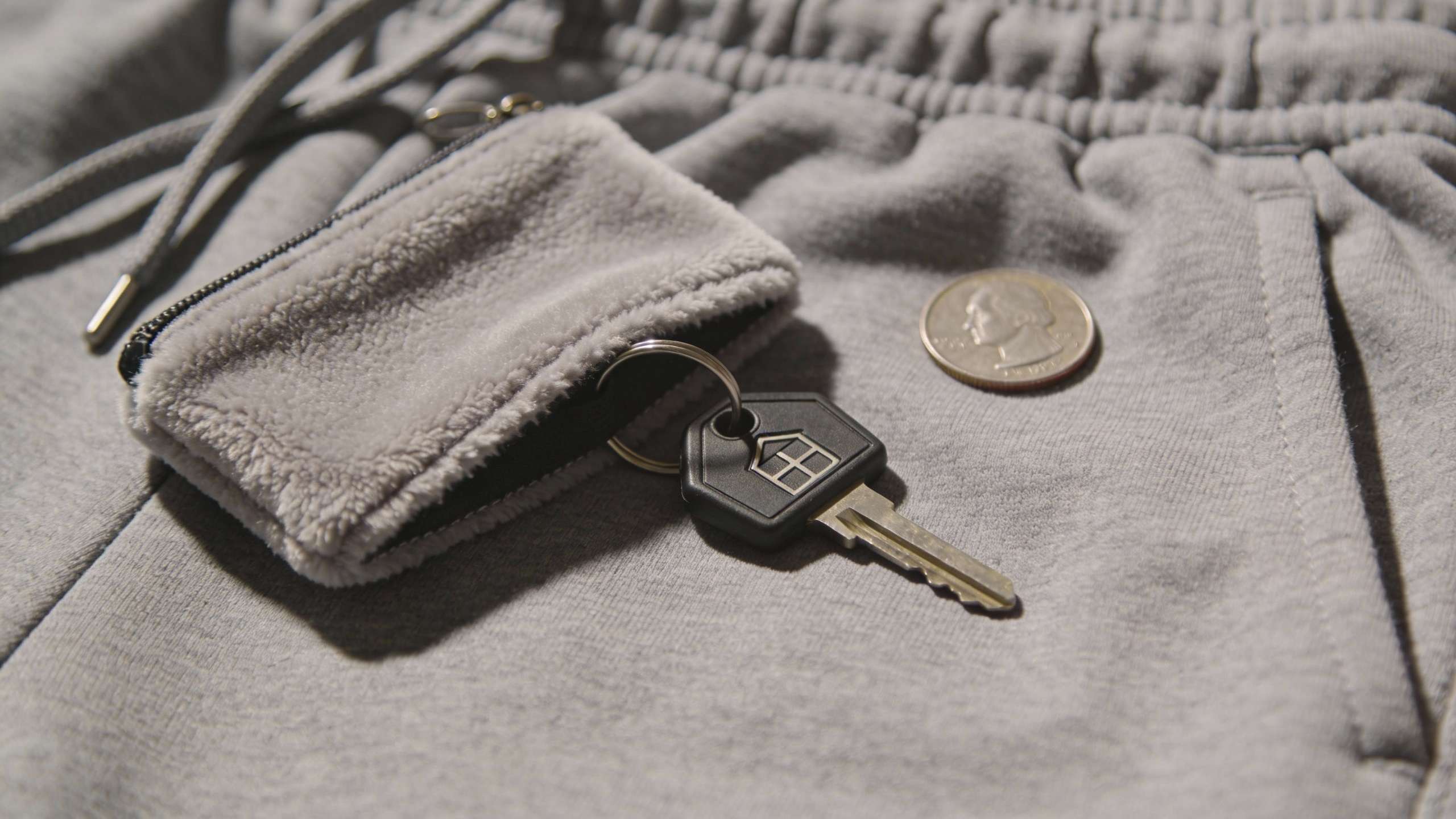
A soft barrier between keys and everything else goes a long way. A thin microfiber sleeve, a small coin pouch, or even a folded piece of athletic tape around the key teeth can keep metal from making direct contact. The goal is not bulk; it is friction control.
This mirrors what you see in good gear design elsewhere. Outdoor gear brands, like the one highlighted in Livsn’s piece on maintaining gear, use internal pockets, liners, and flaps to keep hard items from rubbing directly against shell fabrics. You can create the same kind of separation in your pocket with a minimal, low-tech solution.
Take Advantage of Built-In Key Loops
Some training pants quietly include a small internal key loop or tiny stash pocket inside the main pocket bag. If you have ever seen a little fabric tab or coin-sized compartment inside a pocket and ignored it, now is the time to use it.
That loop or sleeve functions exactly the way the internal pocket in running shorts does in the MierSports article: it holds a single key in a fixed position so it cannot roam around and scratch. Clip a key onto it, zip the pocket, and you have effectively isolated the scratch risk.
DIY and Customization for Serious Players
If you treat your gear the way a performance tuner treats a race bike, you may be willing to customize your pants for a better pocket layout. The good news: sewing resources from the performance and sewing community show that adding zipper pockets is more accessible than many athletes think.
Adding or Upgrading an Exposed Zipper Pocket
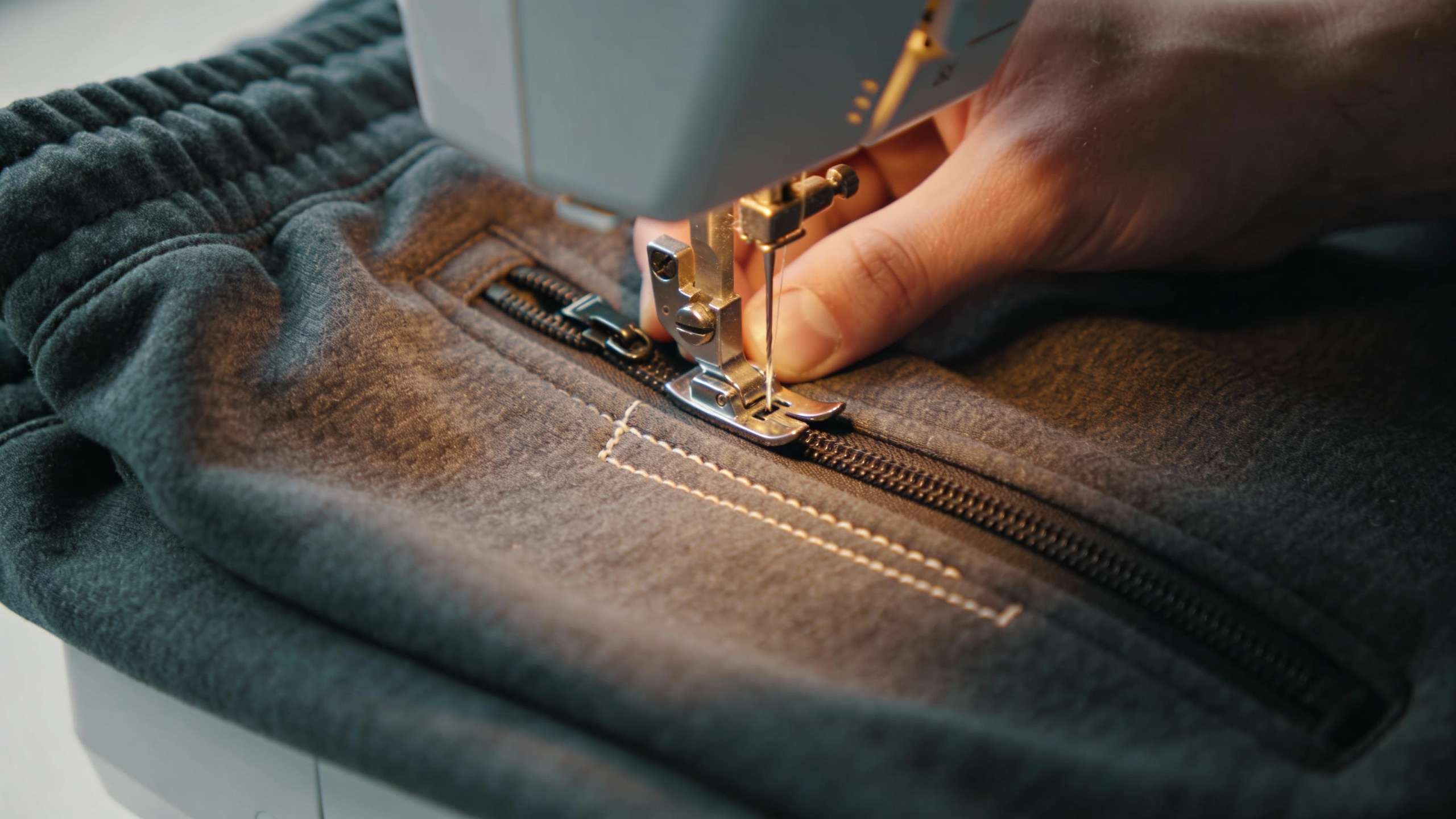
A detailed exposed zipper pocket tutorial from Project Run & Play walks through how to add a zipper pocket to jackets, hoodies, pants, or totes. The method is designed for woven garments, but the principles apply to training pants made from stable knits as well.
The process involves drawing and stitching a precise rectangular opening, attaching pocket fabric rectangles that are about 1.5 inches wider than the zipper, cutting a slit in the middle, flipping the pocket pieces to the inside, and topstitching around the opening about 1/8 inch from the folded edges to secure the zipper. The tutorial emphasizes accuracy at the corners to avoid puckers and create a clean, durable finish.
For a soccer application, you can adapt this approach to add a small exposed zipper pocket high on the thigh or at the rear waistband specifically for a single key. Because you are building a dedicated pocket bag, the key no longer shares space with anything else.
Building a Dedicated Inner Key Sleeve
The same tutorial also describes an easier variation that uses one larger pocket rectangle instead of two, which simplifies construction. You can borrow that idea to add an inner key sleeve inside an existing pocket. Think of it as sewing a smaller pocket onto the lining of the main pocket.
By anchoring a small rectangle of fabric inside the pocket and stitching its sides and bottom, you create a dedicated compartment sized for one key. This mimics the internal stash pockets referenced in running shorts and leggings, and it is one of the most effective ways to eliminate key-to-phone contact without changing how the outside of your pants looks.
Upgrading a Waistband Pocket
If you are comfortable with more advanced sewing, the back-zippered pocket in the Pacific Leggings pattern, described in a tutorial from Sewaholic, offers another blueprint. Those leggings use a large, practical back zipper pocket that can securely hold a smartphone. The tutorial explains how to stabilize the zipper opening with fusible web so the knit waistband does not stretch and ripple against the non-stretch zipper tape.
The same concept can be used to retrofit a soccer pant waistband with a slim zipper pocket designed specifically for keys or a card. Stabilizing the area around the zipper, as Sewaholic does with fusible web, helps your modification hold up under sprinting, sliding, and repeated washing.
Care, Cleaning, and Zipper Maintenance
Even perfect pocket design will not save your pants if poor care lets grit, salt, and bacteria chew up your fabrics and zippers from the inside. Several technical-care guides for performance clothing converge on a few best practices that matter directly for pocket longevity.
Wash Smart to Keep Pockets Smooth
A guide to maintaining performance clothing from a technical apparel resource emphasizes washing technical gear in cold water and using gentle cycles to protect fibers and color. A down-garment care guide from a sportswear brand adds that cool to lukewarm water—around 86°F to 104°F—on a delicate cycle, with mild detergent, helps preserve insulation and structure. Although those articles focus on different garments, the principles transfer well to soccer pants made of synthetic blends.
Avoid fabric softeners. Both the performance clothing guide and the down-care article warn that softeners can clog fabric structures and strip natural oils, reducing breathability and functional performance. In pockets, residue also attracts more dirt and grit, increasing abrasion when keys move around.
Turn your pants inside out, close all zippers and Velcro, and avoid overloading the machine. A men’s sports jacket care article highlights the value of mesh laundry bags to protect zippers and stress points in the wash; those same bags can keep your pant zippers from snagging on other garments and help the pocket fabric maintain its integrity.
Most importantly, wash training pants regularly. Nike’s guidance on washing workout clothes recommends laundering garments that sit close to high-moisture areas—shorts, leggings, and similar pieces—after every use to reduce bacteria and odor. The performance clothing guide echoes that daily-use items like running shorts and base layers should be washed after each workout. Soccer training pants live in that same category.
Protect and Lubricate Zippers
When a zipper starts to stick, many athletes simply pull harder. That extra force distorts the pocket, drags keys sideways across whatever they are touching, and accelerates wear. A zipper-maintenance article from ZipperShipper suggests a better approach.
First, clean the zipper area. Wash the garment or at least wipe down the zipper teeth so you are not grinding dirt into the mechanism. Once it is dry, apply a purpose-made zipper lubricant, such as a wax stick, sparingly along the teeth and run the slider back and forth to distribute it. The article notes that dedicated zipper lubricants are designed to work on both metal and plastic teeth while minimizing staining.
ZipperShipper also reviews common household lubricants, from silicone-based products to bar soap and wax, and cautions that many can stain fabrics or leave messy residue. Those improvisations might be acceptable for a work jacket you do not mind marking up, but for your go-to training pants, a proper zipper lubricant is the safer option.
A smooth zipper reduces the temptation to yank, keeps the tape lying flat, and lowers the chances that your pocket fabric will twist and force your keys against a single spot over and over.
Dry and Store for Long-Term Performance
Multiple gear-care resources, including the men’s sports jacket guide and Livsn’s outdoor gear article, emphasize air drying and complete dryness before storage. Heat from a dryer can degrade synthetic fibers and elastic, and putting gear away damp invites mildew.
After training and washing, hang your pants in a well-ventilated space out of direct sun until they are fully dry. Make sure pockets are turned out at least briefly so trapped moisture and grit can escape. Over time, this simple habit keeps the inside of your pockets smoother and more resistant to abrasion when keys move inside them.
A Real-World Scratch-Proof Setup
Let us put it all together in a single, practical setup that mirrors what I recommend to players who come to me with trashed pockets and battered phones.
You start by choosing training pants with one rear waistband zipper pocket lined with sweat-resistant fabric and two standard side pockets. At home, you pull one house key off your main keyring. That becomes your training key.
Before practice, you slide the house key into the rear zipper pocket, using an internal sleeve or small stitched-on tab if your pants have one, and zip it shut. Your phone goes into a side pocket during warm-up or stays in your bag once training starts. There is never a moment when the phone and key share a pocket.
When you get home, you turn the pants inside out, close all zippers, and wash them in cool to warm water on a gentle cycle with a mild detergent, no softener. Once a month, after washing and drying, you run a purpose-made zipper wax lightly along the pocket zippers so they keep gliding smoothly. You air-dry the pants completely before folding or hanging them in your gear closet.
In this configuration, your key spends every minute of its life in a fixed, padded zone with almost nothing fragile to rub against. Your pockets stay smooth, your zippers stay friendly, and your phone screen looks like it belongs to someone who knows how to treat equipment.
FAQ
Is it ever a good idea to put a full keyring in a zipper pocket?
It is possible, but it is rarely ideal. A full keyring multiplies edges, weight, and leverage inside the pocket. If you must carry a full set, keep it in a separate pocket from your phone or delicate items and use a soft pouch or sleeve to reduce direct contact. For most training sessions, stripping down to a single key or minimal fob is safer and more comfortable.
Can I safely carry a car key fob in my soccer training pants?
Yes, if you treat it like an electronic device, not a spare coin. Give it its own zipper pocket or share space only with very soft items, such as a microfiber cloth. A rear waistband zipper pocket with sweat-resistant lining, as described in running-shorts gear articles, is especially suited to this because it minimizes bounce and adds a moisture barrier.
How do I know if a pair of pants has “good enough” pockets for carrying keys and a phone?
Try a simple test in the store or at home. Load the pants the way you would for training, jog a short distance, and pay attention to where objects move. If keys and phone constantly collide or you feel hardware digging into your skin, the pocket layout is not working for your use. Look instead for designs that offer at least one separate zipper pocket, enough depth to keep items from stacking directly on top of each other, and smooth, low-profile zippers that do not irritate when loaded.
Dialing in your pocket setup is like tuning a performance machine: you eliminate friction, reduce noise, and let your focus stay on the lines you run, not the gear you are babysitting. With smart pant selection, intentional key management, and a bit of care, you can keep your zipper pockets, protect your screens and fabrics, and train as hard as you want without leaving a trail of scratches behind you.
References
- https://www.academia.edu/10078484/The_Power_of_Pockets
- https://blog.founders.illinois.edu/walmart-womens-shorts-athletic/
- https://arc.lib.montana.edu/msu-extension/objects/ext1-000098.pdf
- https://www.montcalm.edu/media/3962/intramural-indoor-football-booklet.pdf
- https://www.sunyopt.edu/pdfs/admissions/DRESS_Code_2013.pdf
- https://extension.arizona.edu/sites/extension.arizona.edu/files/mblock/2020fcs-consumer-decision-making-packet.pdf
- https://studentaffairs.baruch.cuny.edu/wp-content/uploads/sites/6/2021/01/Gender-Affirming-Clothing-Guide-Digital.pdf
- https://www.luthercollege.edu/wp-content/uploads/2024/11/Dress-Code-2024.pdf
- https://uncw.edu/seahawk-life/health-wellness/campus-recreation/facilities/guidelines.html
- http://sewaholic.net/pacific-leggings-sewing-the-back-zippered-pocket/
RELATED ARTICLES


Ready to start your sportswear brand?
Get a free quote for custom sportswear manufacturing with no minimum order quantity.