
How to Design Your Own Custom Jersey: A Step-by-Step Guide 2025


Table of Contents
- What Makes Up a Basic Custom Jersey?
- How Do You Create a Winning Jersey Design?
- Select Color
- Step-by-step Guide to Effective Layout Planning
- Design Requirements:
- Essential Tools:
- Where Should You Place Key Design Elements?
- How Do Different Sports Affect Your Custom Jersey Design?
- How to Meet Essential Jersey Specifications
- Front Design Measurements:
- Back Design Measurements:
- Material Requirements:
- Production Specifications:
- How Can You Ensure Perfect Production Results?
Creating your own custom jersey is an exciting way to express team spirit, personal style, or brand identity. Whether you’re designing for a sports team, special event, or personal use, understanding the fundamentals of jersey design can help you create something both unique and functional. This guide will show you each step of the design process, from choosing the right materials to finalizing your design for production. With attention to detail and some creative thinking, you’ll learn how to craft a jersey that not only looks professional but also meets specific sport requirements and stands out on the field or court.

Sports uniform supplier
What Makes Up a Basic Custom Jersey?
Every great custom jersey starts with understanding the fundamentals. Today’s market offers three main jersey types: replica (for fans), authentic (professional quality), and practice jerseys. Each serves a distinct purpose and comes with different customization options.
Common materials include:
- Polyester mesh: Lightweight, breathable, ideal for most sports
- Dri-FIT fabric: Moisture-wicking, perfect for high-intensity activities
- Cotton blend: Comfortable, but retains moisture
- Performance knit: Durable, maintains shape after washing
Essential design elements every jersey needs:
- Primary identifier (team name or logo)
- Player number (front and back)
- Player name (if desired)
- Collar and sleeve treatments
- Ventilation zones
Key terminology for design discussions:
Front panel, back panel, yoke (shoulder area), side panels, sublimation (printing method), tackle twill (sewn-on letters/numbers), heat transfer (vinyl application method), and moisture management (fabric’s ability to wick sweat).

Performance sportswear manufacturer
How Do You Create a Winning Jersey Design?
Starting your custom jersey design journey requires careful planning and the right tools. Begin by researching successful team jerseys, sports history, and current trends. Save screenshots, create Pinterest boards, or sketch ideas that catch your eye. Consider your team’s identity and values; these should influence your design choices.
Select Color
- Primary colors: Choose high-contrast combinations for visibility
- Secondary colors: Add personality without overwhelming
- Accent colors: Create depth and visual interest
Step-by-step Guide to Effective Layout Planning
- Sketch your initial design on paper
- Mark key elements (team name, number placement)
- Consider how the design flows during movement
- Leave space for sponsor logos if needed
- Plan both front and back views simultaneously
Design Requirements:
- Front numbers: 8-10 inches high
- Back numbers: 10-12 inches high
- Names: 2-3 inches high
- Sleeve numbers: 3-4 inches high
Essential Tools:
- Vector design software (Adobe Illustrator/CorelDRAW)
- Digital templates
- Color swatches
- Measurement guides
- Design mockup software
Where Should You Place Key Design Elements?
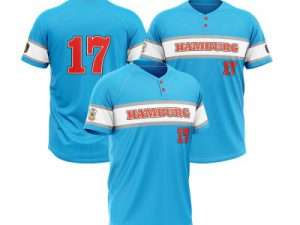
Creating a balanced jersey design requires careful consideration of element placement on both front and back. The front of your jersey serves as the primary identity showcase, featuring your team name or logo prominently in the center chest area, typically spanning 8-10 inches wide. Below this, position the front number, ensuring it stands 8-10 inches tall for optimal visibility during play.
The back of the jersey follows a traditional hierarchy, with the player’s name positioned across the shoulder blades in 2-3 inch letters. The back number commands attention in the center, standing 10-12 inches tall. All elements should maintain at least 2 inches of spacing between them to ensure clarity and prevent visual clutter.
Additional design elements like team mottos, season years, or championship patches can enhance your jersey’s uniqueness. However, exercise restraint—a cluttered jersey can lose its impact. Remember to account for fabric stretch and ventilation areas in your design, and consider whether the jersey will be tucked in during play.
How Do Different Sports Affect Your Custom Jersey Design?
Custom basketball jerseys prioritize freedom of movement and breathability, featuring sleeveless designs and lightweight, moisture-wicking fabrics. The cut must allow for unrestricted arm movement while maintaining number visibility from all angles on the court.
Custom football jerseys require exceptional durability to withstand intense physical contact. These designs must accommodate protective padding underneath while ensuring numbers remain visible across long distances. Material selection focuses on tear resistance and all-weather performance, with reinforced stitching at key stress points.
Custom baseball uniforms balance tradition with modern innovation. While many teams maintain the classic button-up design and traditional typography, contemporary materials offer improved comfort and performance. Consider incorporating heritage elements while utilizing modern moisture management technology.
Notice: Soccer jerseys must adhere to strict international regulations, particularly regarding sponsor placement and number sizing. FIFA guidelines dictate specific measurements and positions for all elements. The design should remain clean and professional while incorporating required patches and meeting federation standards.

Professional sports uniform supplier
How to Meet Essential Jersey Specifications
Understanding technical requirements ensures your jersey design meets official standards while maintaining functionality.
Front Design Measurements:
- Primary number: 8-10 inches height
- Team name: 4-6 inches height
- Logo placement: 4×4 inches maximum
- Sponsor area: 3×10 inches maximum
Back Design Measurements:
- Player number: 10-12 inches height
- Name plate: 2-3 inches height x 12 inches width
- Secondary sponsor: 3×6 inches maximum
Material Requirements:
- Base fabric weight: 160-180 grams per square meter
- Stretch capacity: 15-20% minimum
- Moisture-wicking rating: 3.5 or higher
- Color fastness: Grade 4-5 on international scale
Production Specifications:
- Heat resistance: Up to 170°F for sublimation
- Wash durability: 50+ cycles without fading
- Seam strength: 25 lbs minimum pull test
- UV protection: UPF 30+ rating recommended
How Can You Ensure Perfect Production Results?
Selecting the right custom jersey manufacturer is crucial for your jersey’s quality. Look for companies with proven experience in your specific sport, check their previous work, and request material samples before committing. Ensure they offer your preferred production method, whether it’s sublimation, tackle twill, or heat transfer.
When preparing files for production, use vector formats (AI or EPS) and convert all text to outlines. Include a detailed specification sheet noting exact colors (Pantone numbers), measurements, and special instructions. Always request a digital proof before production begins.
Color matching requires special attention:
- Provide physical color samples when possible
- Account for material color differences
- Consider how colors appear under various lighting
- Request sample swatches before full production
Common mistakes to avoid:
- Rushing the proofing process
- Ignoring minimum size requirements
- Using low-resolution graphics
- Not checking color accuracy
- Skipping quality control checks
Save costs by ordering in bulk, using standard materials, and planning seasonal orders in advance.
RELATED ARTICLES

Ready to start your sportswear brand?
Get a free quote for custom sportswear manufacturing with no minimum order quantity.