
Waterproof vs Water-Repellent: How to Choose the Right Finish for Team Outdoor Adventures

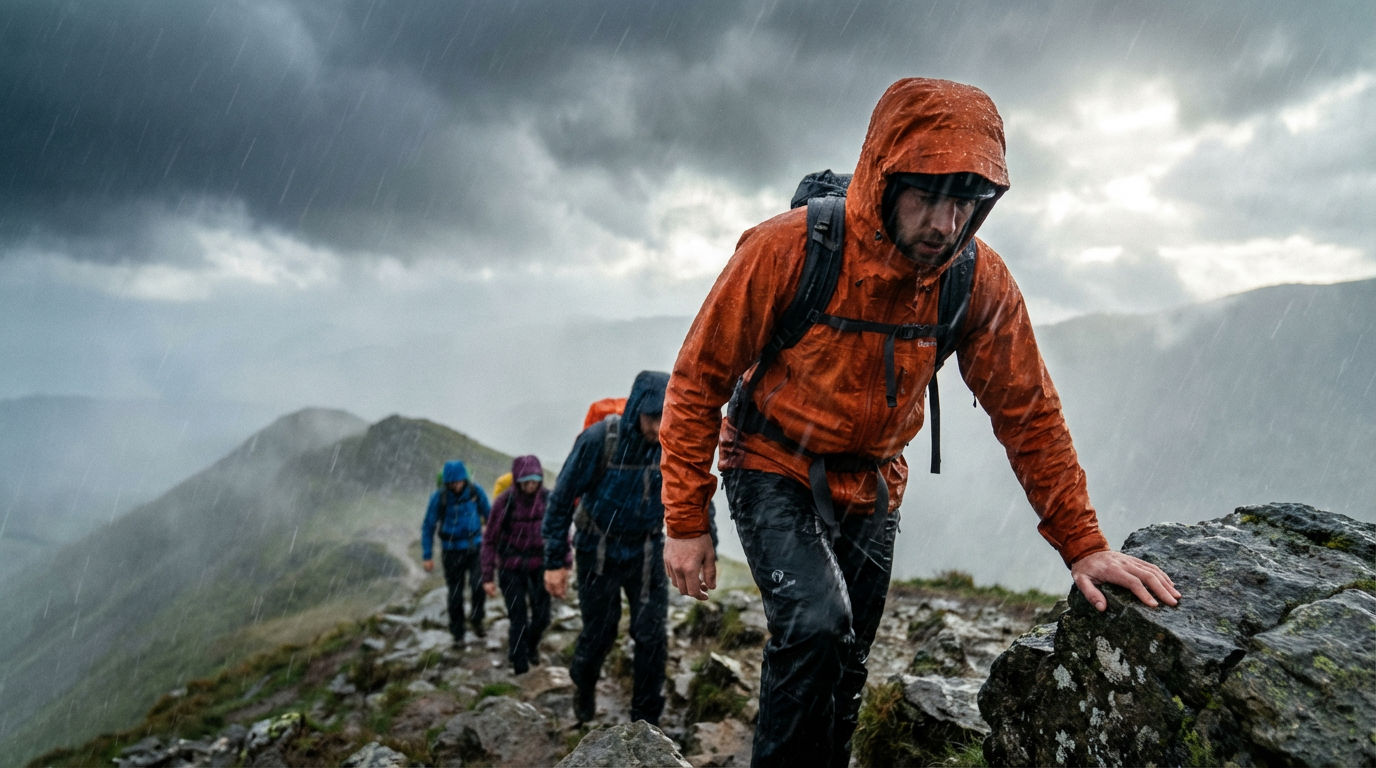
Table of Contents
- Waterproof, Water-Resistant, Water-Repellent: Getting the Language Straight
- How Modern Rain Systems Actually Keep You Dry
- The Water-Repellent Surface: Your First Line of Defense
- The Waterproof Barrier: Coatings and Laminates
- Breathability: Managing Sweat for a Whole Team
- Waterproof vs Water-Repellent in Real Team Scenarios
- Team Hiking and Backpacking Weekends
- Trail Running, Conditioning Drills, and Fast-and-Light Missions
- Bikepacking, Paddling, and Motorized Adventure
- Camps, Clinics, and Casual Team Events
- A Simple Comparison: What Each Finish Does Best
- Reading Fabric Specs Without Getting Lost
- Design Details That Matter as Much as Fabric
- Sustainability and Regulatory Pressures: PTFE, PFAS, and New Membranes
- Care, Re-Waterproofing, and Keeping Your Investment Alive
- FAQ: Common Team Questions About Waterproof vs Water-Repellent
- Can I run a multi-day team hike with only water-repellent jackets?
- Are coated fabrics good enough for serious outdoor training?
- How do I explain these differences quickly to a team that just wants to know what to pack?
- References
When you lead a group into the mountains, onto the trail, or out on the water, nothing kills team energy faster than everyone getting soaked and clammy by lunchtime. I have watched teams show up in “rain jackets” that looked sharp in the parking lot, only to wet out in the first serious squall. The root problem almost always comes down to one thing: confusing waterproof with water-repellent.
In Chinese outdoor slang, you often see two words here: 防水 for truly waterproof systems, and 拒水 for water-repellent surface finishes. On spec sheets they can sound similar. On a windy ridge in driving rain, they are absolutely not the same thing.
As a Kawasaki performance gear specialist and year-round adventure leader, I want your team to feel like they are riding a perfectly tuned machine: protected, efficient, and ready to go again tomorrow. That means building your kit around the right fabric treatment from the start, not trying to fix it with a poncho on day two.
Let’s break down the tech, the trade-offs, and the real-world choices for outdoor team activities.
Waterproof, Water-Resistant, Water-Repellent: Getting the Language Straight
Textile brands and retailers throw these words around in very loose ways, so I lean on how technical fabric makers and independent gear testers use them.
Water-resistant is the entry level. Research from fabric specialists like Manteco and Maake describes water-resistant fabrics as tightly woven materials, usually nylon or polyester, that slow water down but do not fully block it. They work in light rain or passing showers. Over time or under pressure, water will get through. Think of a team jog in light drizzle or a short dog walk; you will be fine. On an all-day ridge hike in a storm, you will be cold and wet.
Water-repellent (the 拒水 concept) steps up protection by adding a surface treatment, most often a durable water repellent finish known as DWR. This lowers surface tension so water beads and rolls off instead of soaking in. Sources from Maake, Manteco, Ruffwear, and REI all highlight this behavior. The fabric itself may still be just water-resistant, but that beading buys you valuable time and comfort.
Waterproof (防水) is a different animal. Waterproof systems are designed to be effectively impervious to liquid water in real weather, not just a spray test. Technical guides from Event Fabrics, BeGoodTex, Manteco, and Harvard’s First-Year Outdoor Program agree on the key ingredients: a continuous waterproof barrier such as a membrane or coating, plus construction details like seam sealing and waterproof zippers.
A critical nuance from multiple sources: labels alone are not enough. Water-resistant vs waterproof on a hang tag does not guarantee a particular protection level. That is why you need to understand how the fabric system is built.

How Modern Rain Systems Actually Keep You Dry
When we talk about “waterproof vs water-repellent,” we are really talking about layers in a system that work together. If you have ever had a jacket that technically did not leak but still felt clammy and soaked, you have seen what happens when that system breaks down.
The Water-Repellent Surface: Your First Line of Defense
DWR and other repel finishes are surface treatments. As Event Fabrics, Maake, Ruffwear, and Harvard’s FOP guide explain, the chemistry lowers the surface tension of the fabric so water forms droplets and rolls off. This is what you see when a brand-new shell shows tight little beads of water dancing across the surface.
This repellent effect is powerful but fragile. Dirt, body oils, sunscreen, salt, and simple abrasion from packs and harnesses all contaminate and wear down DWR. When it fades, the face fabric starts to soak up water instead of shedding it. Technical guides call this “wetting out.” Mountain Equipment notes that when shoulders and knees darken and stay dark in the rain, you are seeing this wet-out, especially in high-wear areas under pack straps or at the seat.
Important point: a jacket can wet out on the surface and still be technically waterproof because the membrane underneath is intact. But once the outer layer is saturated, breathability crashes. Your sweat has nowhere to go, and you feel chilled and damp from the inside.

The Waterproof Barrier: Coatings and Laminates
To reach true 防水 performance, you need more than a surface treatment. You need a continuous barrier behind the face fabric.
Research and industry guides describe three main approaches.
Coated fabrics use a waterproof layer painted or transferred onto the inside of a textile. Polyurethane and PVC coatings are common. BeGoodTex and Harvard’s FOP notes explain that coated nylon can block liquid water but still allow some water vapor to escape. Coated systems are often inexpensive and work well for value-oriented rain gear and some team-use shells. The trade-off is that heavy coatings reduce breathability and can feel less comfortable against the skin.
Laminated membranes bond a thin film to the fabric. This is now the dominant approach for high-performance shells according to BeGoodTex and Event Fabrics. In a typical three-layer construction, you have a durable face fabric outside, a waterproof-breathable membrane in the middle, and a protective backer inside. This sandwich protects the membrane from abrasion and body oils, which is why top-end mountaineering jackets rely on it.
Within laminates, there are different membrane chemistries. Microporous membranes like expanded PTFE (the classic Gore-Tex story) use tiny pores that are small enough to block liquid water but large enough to let water vapor escape. Dense hydrophilic membranes, such as certain TPU films, have no pores at all; they move moisture by a diffusion process driven by vapor pressure from warm, damp air inside pushing toward cooler, drier air outside. There are also hybrid approaches that combine both.

Textile labs and outdoor brands are pushing new constructions: two-layer, two-and-a-half-layer, three-layer, and beyond. Event Fabrics and multiple jacket reviews highlight how two-and-a-half-layer fabrics save weight for ultralight shells, while three-layer builds deliver the most durable, all-conditions protection for alpine and expedition use.
Breathability: Managing Sweat for a Whole Team
Every waterproof decision in a team context must balance two risks: getting soaked by rain from the outside, and getting soaked by sweat from the inside.
Breathability is measured in the lab by things like moisture vapor transfer rate (MVTR) and resistance to evaporative heat transfer (RET). Guides from Event Fabrics and Live for the Outdoors show how higher MVTR and lower RET values correspond to higher-output activities like backpacking, climbing, cycling, and trail running.
In field terms, that means this: if your outdoor team is hiking slowly in cool weather, a modestly breathable waterproof may be fine.

If you are running intervals, coaching high-intensity field drills, or leading a fast, loaded ascent, a low-breathability fabric will leave the group sweaty, chilled, and at higher risk of hypothermia when wind and rain combine.
That is where water-repellent but more breathable fabrics can make sense, as long as you know the weather and pressure limits.
Waterproof vs Water-Repellent in Real Team Scenarios
Let’s take the technical language and drop it into real adventures with real people. Different sports and group goals change what you should prioritize.
Team Hiking and Backpacking Weekends
For multi-day hikes or backpacking trips where your team will be out all day in unpredictable weather, the baseline is clear from Event Fabrics, Harvard’s FOP, and Live for the Outdoors: build around a laminated waterproof-breathable shell with a durable water-repellent surface and fully taped seams.
A repellent-only softshell or treated cotton might get you through a short shower, but once the outer fabric saturates, shoulders under pack straps see high pressure. Guides from textile labs and dog-gear specialists alike show that pressure points drastically reduce the effective waterproofness of lighter systems. On backpacking trips, those pressure zones are exactly where your team cannot afford leaks.
For these trips, my own approach with groups is simple.

Jackets must have a hood. They must use a true waterproof fabric with seam taping. I treat water-repellent windbreakers as extra layers, not as primary rain protection.
Trail Running, Conditioning Drills, and Fast-and-Light Missions
Now flip the script to high-output movement. If your trail running crew is doing tempo work on rolling terrain, or you are leading conditioning drills in cold drizzle, sweat management becomes the limiting factor.
In this zone, high-quality water-repellent fabrics can shine. They often use tightly woven synthetic fibers with a DWR finish, which gives a good balance of wind protection, quick-dry performance, and enough water shedding for intermittent showers. Western Rise and several fabric makers note how these pieces feel lighter and more breathable than fully waterproof shells.
The catch is duration and intensity of rain. These layers are not designed for hours of sustained downpour. My rule with running teams is to deploy them when the forecast calls for cool temps with intermittent light rain or mist, and to have at least a couple of true waterproof shells in the group for changing conditions or more vulnerable teammates.

Bikepacking, Paddling, and Motorized Adventure
When you add speed, spray, and sustained wind, water hits the fabric harder. The hydrostatic head effectively goes up because droplets are driving into the surface, not just falling on it. Ruffwear’s testing notes that wind-driven rain can exert water pressures comparable to serious lab test levels, which is why even dog jackets aimed at active use rely on waterproof membranes plus seam sealing.
For team gravel rides, bikepacking trips, paddle training, or motorsport support crews, I treat waterproof shells as non-negotiable.

Here, a purely water-repellent finish is a great add-on for things like riding pants or softshell midlayers, but your outermost barrier needs a membrane or coating and properly sealed seams.
Camps, Clinics, and Casual Team Events
Not every team event is an epic mission. Maybe you are running a skills clinic, a youth camp in mild conditions, or a casual outdoor brand activation. In these lower-risk settings, water-repellent outerwear can deliver a nicer hand feel, more stylish cuts, and better everyday comfort.
Multiple sources highlight how water-repellent jackets suit urban and lifestyle use where you can duck under shelter or head indoors when weather turns. For these situations, I still look for fabrics with a DWR finish and at least basic water resistance in the weave, but I do not insist on taped seams or high hydrostatic head ratings for every single participant.
A Simple Comparison: What Each Finish Does Best
Here is a quick visual snapshot you can use when planning team kit.
|
Protection level |
Typical tech and treatments |
Behavior in rain |
Best use in team settings |
|---|---|---|---|
|
Water-repellent |
Tightly woven fabric with DWR or similar surface coating |
Beads light rain, soaks through in long or heavy exposure |
Light training days, urban events, short sessions with easy access to shelter |
|
Water-resistant |
Dense weaves, sometimes with basic coatings |
Slows water ingress; will wet through under sustained rain or pressure |
Windy, cool days with occasional showers, low-risk outings |
|
Waterproof |
Coated or laminated membrane, seam sealing, often plus DWR |
Blocks external water under heavy rain and moderate pressure |
Multi-hour rain, backpacking, paddling, high-speed or high-exposure missions |
When in doubt for a serious team adventure, err on the waterproof side for any role that cannot easily swap gear or leave the field.

Reading Fabric Specs Without Getting Lost
If you spend time on spec sheets the way I do, you will see numbers like hydrostatic head ratings and breathability figures. They can be confusing, and different brands test in different ways, but some patterns are clear.
Hydrostatic head is the classic waterproofness test. Lab techs clamp a sample under a column of water one inch across and slowly increase water height until droplets push through. The height of that column is the rating. Textile guides describe fabrics that barely resist water as water-repellent, then water-resistant, and only in the upper bands do they count as truly waterproof in practice.
You will often see ratings written in millimeters. A “10,000 mm” fabric on a spec sheet means the lab column reached roughly 33 ft of water before the sample leaked. Higher numbers mean the barrier can handle more pressure, which matters for pack straps, kneeling on wet ground, or sitting on a soaked stadium bench.
Breathability is commonly quoted as grams of water vapor moved through a square meter of fabric in twenty-four hours. Event Fabrics gives qualitative bands where entry-level numbers work for lower-output activities like fishing or casual camping, midrange values suit backpacking and general mountain use, and the highest values target running, cycling, and other sustained aerobic efforts. Because each lab uses its own method, I focus less on absolute numbers and more on relative positioning within a brand’s own lineup.
Layer count, such as two-layer, two-and-a-half-layer, three-layer, or more, influences durability and comfort. Harvard’s program and multiple jacket tests note that two-layer pieces often use a hanging mesh lining to protect the membrane and feel soft, while three-layer shells bond a robust inner backer that handles abrasion from packs and harnesses. Two-and-a-half-layer fabrics print a protective pattern directly onto the membrane side to save weight; they can feel a little clammy but excel in fast-and-light missions.
When equipping a team, I like to standardize on three-layer shells for leaders and high-exposure roles, and use lighter two-and-a-half-layer options where pack weight and budget matter more.

Design Details That Matter as Much as Fabric
Even the best membrane cannot save a poorly designed jacket.
Event Fabrics and Harvard’s FOP both emphasize seam sealing as non-negotiable for waterproof garments. Every stitch is a line of perforations through the barrier; taping or sealing those seams is the only way to maintain integrity. If a “waterproof” jacket lacks seam tape, I file it under water-resistant and plan accordingly.
Zippers and openings are another weak point. Technical guides highlight the value of water-resistant zippers and storm flaps, as well as pit zips in the underarm area for mechanical ventilation. I have watched pit zips make the difference between a team moving efficiently up a wet pass and a group bogging down because everyone needs constant “layer breaks.”
Fit and hood design are not fashion details; they are performance features. Harvard’s program requires jackets with proper hoods, and Live for the Outdoors calls out the importance of adjustability. A hood that moves with your head and has a stiffened brim or bill keeps water off faces and maintains situational awareness. For team sports and coaching, that awareness is a safety feature.
Pocket placement matters for anyone wearing packs, harnesses, or PFDs. High hand pockets that sit above hip belts and chest pockets accessible when wearing a harness are not just mountaineering flourishes; they are how you keep snacks, radios, and cell phones ready when conditions are ugly.
Sustainability and Regulatory Pressures: PTFE, PFAS, and New Membranes
Performance is not the only dimension anymore. Environmental regulations and brand commitments are reshaping waterproof technology, and you will see this in team gear over the next few seasons.
BeGoodTex and several jacket reviews note that traditional PTFE membranes and many classic DWR chemistries involve perfluorinated substances, often grouped under PFAS. These “forever chemicals” are extremely persistent in the environment and are now under increasing regulatory scrutiny. Disposal by incineration or landfilling of PTFE-based products can release long-lived compounds into air and soil.
In response, brands are moving toward alternatives. Some waterproof systems now use dense hydrophilic TPU films instead of PTFE. Others use new membrane chemistries such as ePE (expanded polyethylene) that aim to maintain high performance without legacy fluorinated compounds. Maake also highlights PFA-free membranes like Porlite, already used in some cycling rain gear, as part of this shift.
For a team or organization with sustainability goals, this means two things.

First, when purchasing new waterproof pieces, watch for notes about PFAS- or PFC-free membranes and DWR finishes. Second, extending the life of existing gear through proper care and reproofing is an environmental win. Protect Our Winters and several gear-care guides frame this as direct climate action: more seasons per jacket mean fewer new jackets produced.
Care, Re-Waterproofing, and Keeping Your Investment Alive
One of the biggest myths I still hear from athletes and guides is that washing waterproof gear ruins it. The opposite is true.
Care guides from Mustang Survival, Mountain Equipment, and climate-focused organizations all stress that regular cleaning extends performance and lifespan. Sweat, oils, mud, and sunscreen clog face fabrics and membranes and contaminate DWR. The result is early wet-out, stale odors, and a jacket that feels “blown out” long before the membrane actually fails.
The basic cycle is straightforward. Close all zippers and hook-and-loop tabs. Loosen drawcords. Spot-clean heavy dirt with a damp cloth and, if needed, a small amount of technical wash. Then machine wash on a gentle cycle in warm water, using either an additive-free mild detergent or a cleaner specifically designed for waterproof fabrics. Avoid standard detergents with brighteners, fabric softeners, bleach, or stain removers, which can interfere with water-repellent finishes.
Drying matters too. Many technical sources recommend tumble drying on low or warm settings, which can help revive DWR on some garments and activate new spray-on treatments when used. Line drying is possible but may leave some face fabrics looking a bit crinkled. Mountain Equipment notes that this is a cosmetic issue, not a performance problem.
Re-applying water-repellent finishes is the final step when water no longer beads on the surface. Mustang Survival and general care guides favor spray-on products that are free of wax and silicone and designed for modern membranes. Spray onto the clean, damp garment, paying extra attention to high-exposure zones such as shoulders, hoods, and elbows, then wipe away excess and tumble dry low if the care label allows.
Tents, boots, and canvas shelters benefit from similar cycles. Field and Stream style guidance suggests testing at the start of each season with a hose or heavy spray. If water darkens and clings rather than beading and shaking off, it is time to clean and re-treat. The factory-applied finish will usually last longest; re-applied coatings are effective but not eternal, so plan on periodic maintenance for gear that sees heavy use.
For teams, this care routine is worth building into your calendar. A dedicated “gear maintenance afternoon” each season can add years of life to shared waterproof kits and keep everyone drier, safer, and happier in the field.
FAQ: Common Team Questions About Waterproof vs Water-Repellent
Can I run a multi-day team hike with only water-repellent jackets?
You can, but it is a gamble. Water-repellent pieces with good DWR and dense weaves can handle light showers and short storms, especially if you can reach shelter quickly. Once rain becomes sustained or when pack straps increase pressure on shoulders, water will eventually push through. For multi-day trips where turning back is not trivial, at least the core team should have fully waterproof, seam-taped shells.
Are coated fabrics good enough for serious outdoor training?
They can be, with clear expectations. Polyurethane-coated nylon offers solid waterproofness at a good price, which is why programs like Harvard’s outdoor orientation recommend it as a value option. The trade-offs are lower breathability and a stiffer feel compared to premium laminates. For moderate-output hiking or camps, they work well. For high-intensity running or spring cycling, they may feel clammy unless you manage layers and vents carefully.
How do I explain these differences quickly to a team that just wants to know what to pack?
I keep it simple. Water-repellent is fine for town and short, low-risk sessions. Water-resistant helps in light rain but will not protect in a storm. Waterproof, with a membrane and taped seams, is what you reach for when the plan or forecast involves real exposure. For any mission where getting drenched could compromise safety or performance, waterproof shells are required, and everything else is a bonus.
Water is relentless, but with the right fabric strategy your team does not have to be. Match waterproof barriers and water-repellent surfaces to your actual mission, invest in designs that manage both rain and sweat, and maintain them with the same care you put into tuning a performance bike or race-day engine. Do that, and the next time the sky opens up on your training camp or summit push, your crew will keep moving, laughing, and looking for the next challenge instead of the exit.
References
- https://fop.fas.harvard.edu/raingear
- https://www.sailrite.com/Waterproof-vs-Water-Resistant-Fabrics?srsltid=AfmBOoqn5_l3404oDP7wsofGlzbntfVTPA73AmiwDpODVUmclWbDlqIo
- https://www.seattlefabrics.com/Outerwear-Fabrics_c_18.html?srsltid=AfmBOoq6xzg2hCmvcjWN-p6_Z8izzyXg4tdhxfk-uHaqluYP0gtg1Srg
- https://begoodtex.com/function-classification-of-waterproof-fabrics-and-the-difference-with-waterproof-membrane-and-their-characteristics/?srsltid=AfmBOorg0SV8wcODRi8Kp3A5bIHubbtyE9r-Bk1qGRTvHJWx09iUr1W_
- https://bettertrail.com/outdoor-gear/best-rain-jackets
- https://eventfabrics.com/the-ultimate-guide-to-waterproof-breathable-fabrics/
- https://manteco.com/what-is-the-difference-among-water-repellent-water-resistant-and-water-proof-clothing/
- https://www.masterclass.com/articles/difference-between-waterproof-and-water-resistant
- https://us.mountain-equipment.com/pages/caring-for-waterproofs
- https://protectourwinters.nz/how-to-care-for-your-outdoor-essentials/
RELATED ARTICLES

Ready to start your sportswear brand?
Get a free quote for custom sportswear manufacturing with no minimum order quantity.