
Understanding the Benefits of Polyester-Cotton Blends for Casual Team Attire

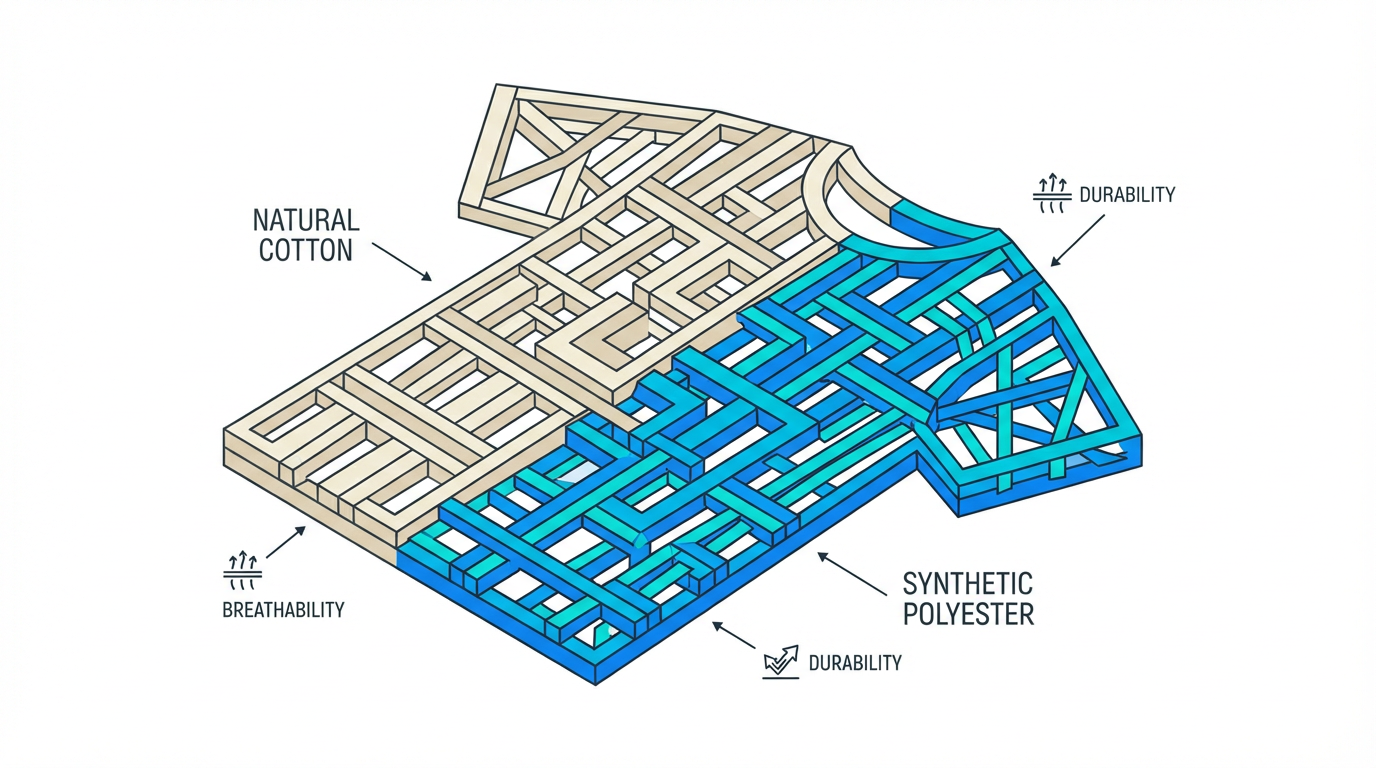
Table of Contents
- What Exactly Is a Polyester-Cotton Blend?
- Common Blend Ratios and What They Feel Like
- Polyester vs Cotton vs Blends: A Quick Comparison
- Performance Benefits for Casual Team Attire
- Comfort During Real-World Activity
- Durability and Shape Retention
- Color, Branding, and Print Quality
- Moisture Management and Drying Time
- Wrinkles, Shrinkage, and “Ready-to-Wear” Factor
- Practical Pros and Cons of Poly-Cotton for Teams
- Care, Shrinkage, and Long-Term Appearance
- Sustainability and the Bigger Picture
- How to Choose the Right Blend for Your Team
- Brief FAQ on Polyester-Cotton Blends for Team Gear
- Are polyester-cotton blends comfortable enough for hot-weather events?
- Do polyester-cotton team shirts shrink?
- Are blends safe for sensitive skin?
- References
When you are building a high-energy team—whether it is a Kawasaki track crew, a weekend riding club, or an outdoor event staff—what they wear is part performance gear and part moving billboard. I have stood in paddocks, trailheads, and shop floors where a whole crew is working hard under sun, sweat, and gas fumes, and I can tell you this: the fabric choice on those “simple” casual shirts can either support the mission or sabotage it. Polyester-cotton blends sit right in that sweet spot between comfort, durability, and brand-ready style, which is why so many sports, workwear, and promo brands keep coming back to them.
In this guide, I will break down what polyester-cotton blends really are, how they stack up against 100% cotton and 100% polyester, and why they are such a strong option for casual team attire. I will draw on research from textile suppliers, care experts, and sustainability institutes, alongside real-world experience outfitting teams that live in their gear all day long.
What Exactly Is a Polyester-Cotton Blend?
A polyester-cotton blend is a fabric spun from both natural cotton fibers and synthetic polyester fibers. According to textile overviews from Merchize, ModaKnits, and Textile-Yarn, the goal is to combine cotton’s softness, breathability, and familiar hand feel with polyester’s strength, wrinkle resistance, quick drying, and color stability.
Cotton is a cellulose-based fiber. It is soft against the skin, highly breathable, and extremely absorbent; some sources, such as Textile-Yarn, note that cotton can hold water many times its own weight. That makes pure cotton feel cool and natural, which is why it is still the default for T-shirts and everyday apparel. The trade-off is that cotton tends to shrink, wrinkle, and gradually lose its crisp shape, especially under high-heat washing and drying.
Polyester, as explained by Goonvean Fibres and others, is a petroleum-derived synthetic fiber with very different behavior. It is strong, abrasion-resistant, and highly resistant to stretching, shrinking, and wrinkling. It does not absorb much water, which helps it dry quickly and makes it a go-to for sportswear and workwear. It also retains color well and stands up to frequent washing. The downside is that it can trap heat, feels less breathable, and can generate static and pilling, especially in dry or cold weather.
A polyester-cotton blend allows manufacturers to dial in a specific balance.

Instead of choosing between all comfort or all durability, you get a tuned mix that can be adjusted for a particular sport, climate, or team use case.
Common Blend Ratios and What They Feel Like
Different ratios behave differently, and that matters when you are picking fabric for a casual team line.
Many workwear and sportswear guides, including those from Merchize, MH-Chine, and ModaKnits, highlight several common ratios. A classic 50/50 cotton-polyester blend gives roughly equal influence to each fiber. The cotton keeps the hand feel soft and familiar, while polyester significantly improves durability, reduces shrinkage, and speeds up drying. DiscountMugs points out that this half-and-half balance is a popular choice for event T-shirts, youth teams, and community gear that needs to survive heavy laundering.
Cotton-rich blends, such as 65/35 or 80/20 cotton/polyester, lean into comfort while still borrowing polyester’s stability. Merchize describes an 80/20 cotton-heavy blend as especially soft and breathable, yet noticeably more resistant to wrinkles and shrinkage than pure cotton. Jiexing Textile highlights a 77/23 cotton/polyester fabric widely used for school and work uniforms, where the cotton dominates the feel while polyester quietly adds strength and shape retention.
Polyester-rich blends, like 60/40 or 65/35 polyester/cotton, are common in uniforms and performance teamwear that take a beating. MH-Chine and Textile-Yarn note that increasing polyester content generally boosts durability, colorfastness, and wrinkle resistance, while still keeping more comfort than a pure synthetic jersey. These are the blends I see most often in pit crews, shop teams, and outdoor event staff shirts that are washed hard and worn harder.
In short, the higher the cotton content, the more natural and breathable the shirt feels but the more you need to manage shrinkage and wrinkles.

The higher the polyester content, the more durable and low-maintenance it becomes, with a modest trade-off in breathability and natural feel.
Polyester vs Cotton vs Blends: A Quick Comparison
To choose the right fabric for casual team attire, it helps to see the trade-offs side by side. Drawing on sources like DiscountMugs, RushOrderTees, Textile-Yarn, and Goonvean Fibres, here is a high-level comparison.
|
Feature |
100% Cotton |
Polyester-Cotton Blend |
100% Polyester |
|---|---|---|---|
|
Feel and breathability |
Very soft, highly breathable, natural feel |
Soft and fairly breathable; feel depends on ratio |
Smooth but less breathable; can feel warm or clingy |
|
Moisture behavior |
Absorbs sweat and holds it; can feel damp |
Absorbs some moisture and also wicks it; dries moderately fast |
Wicks and dries quickly but absorbs very little; can feel clammy if airflow is poor |
|
Durability |
Comfortable but less abrasion-resistant; fibers weaken when wet |
Stronger than cotton; better tear resistance and seam strength |
Very strong and abrasion-resistant; ideal for heavy use |
|
Shrinkage and wrinkles |
Prone to shrinking and wrinkling, especially with heat |
Lower shrinkage and fewer wrinkles; more “wash and wear” |
Minimal shrinkage and wrinkling; holds shape well |
|
Color and print behavior |
Excellent for screen printing and bold graphics; can fade over time |
Good color retention; prints are solid but may need tuned inks |
Colorfast; vivid shades; some print methods are more limited |
|
Care and maintenance |
Needs more care: cooler washes, careful drying, more ironing |
Easy care: warm washes, low to medium dryer heat, little ironing |
Very easy care: cool to warm washes, low-heat drying; avoid high heat and certain chemicals |
|
Sustainability snapshot |
Renewable and biodegradable but water- and pesticide-intensive |
Tougher to recycle due to mixed fibers; extended lifespan can offset some impact |
Made from fossil fuels, non-biodegradable, sheds microplastics; recycled options are improving |
This table hides a lot of nuance, but the pattern is clear.

Blends offer a middle path that often suits casual team gear better than either extreme. They are comfortable enough for all-day wear and tough enough for the rough-and-tumble of real adventure and work.
Performance Benefits for Casual Team Attire
When I choose fabric for a Kawasaki crew or club, I start from performance. Regardless of whether the team is wrenching in the paddock, working registration at a charity ride, or coaching kids on a dirt course, the shirts or polos must keep up with real movement, real sweat, and real weather.
Comfort During Real-World Activity
Pure cotton sets the benchmark for softness and breathability. Textile-Yarn and Glory Allan both emphasize how comfortable cotton is for daily wear, especially in warm conditions. For a casual team, that matters; nobody wants their riders’ meeting derailed because half the group is fussing with clingy, overheated shirts.
However, cotton’s high absorbency has a downside: it soaks up sweat and holds onto it. DressFresh points out that cotton-polyester blends feel more comfortable for everyday wear because polyester helps moisture move through the fabric and dry faster. When your team is going from early-morning setup in cool air to mid-afternoon heat, a blend keeps them from sitting in a damp, heavy shirt after the first hard push.
Blends with higher cotton content, like 65/35 or 77/23 cotton/polyester, feel very close to pure cotton but do not become quite as soggy. Polyester-rich blends lean more sporty, with a slightly crisper feel and better moisture behavior in sustained activity. For casual team attire that needs to ride the line between loungewear and light performance, that combination is hard to beat.

Durability and Shape Retention
Durability is where polyester really shows its value. Goonvean Fibres notes that polyester fibers are mechanically strong and resistant to stretching and shrinking, which is why they are used in industrial ropes, seatbelts, and reinforcement fabrics. When you blend those fibers into cotton, you get team shirts that hold their shape and resist wear.
Textile-Yarn reports that cotton-polyester blends can reduce fabric degradation by up to about thirty percent compared with pure cotton. ModaKnits highlights how blends shrink less, with typical cotton-rich blends shrinking only a few percent under heat, while pure cotton garments can shrink significantly more. Anyone who has watched a stack of new cotton tees gradually turn into a pile of mismatched sizes after a few hot washes knows how valuable that stability is for teams.
In rough conditions, such as construction sites, shop floors, or race paddocks, FRDrotex and MH-Chine both point out that polyester-cotton work clothes are more resistant to tearing and ripping than 100% cotton equivalents.

That is exactly what you want when crew members are hauling tires, loading bikes, and crawling around trailers.
Color, Branding, and Print Quality
Casual team attire is rarely blank. Logos, numbers, sponsors, and bold color blocks are part of the package. DiscountMugs emphasizes that 100% cotton still holds heavy screen-printed graphics best, especially when you want sharp edges and maximum opacity. For extremely print-heavy designs, there is still a case for cotton or at least cotton-faced fabrics.
However, one of the reasons brands keep choosing blends for printed merchandise is color longevity. Textile-Yarn and MH-Chine both underline that polyester holds dye exceptionally well, so cotton-poly blends tend to keep colors brighter and more consistent over time than pure cotton. That means your Kawasaki green or corporate red does not wash out after a season of laundering.
Print-on-demand platforms such as Printify, Printful, and RushOrderTees stress that cotton-poly blends and tri-blends create a softer, more vintage-feeling print surface for direct-to-garment and plastisol inks. For fan tees and lifestyle pieces where a softer hand feel matters, a cotton-rich blend can be the sweet spot: comfortable on the skin, with branding that still looks crisp and modern.
Moisture Management and Drying Time
Moisture management is not just about comfort; it is about how quickly your team gets back to feeling fresh between heats, shifts, or games. Polyester is hydrophobic and wicks moisture along the fiber surface, while cotton is absorbent and holds it. Merchize and Textile-Yarn describe cotton-poly blends as pairing cotton’s absorbency with polyester’s fast-drying behavior, which means sweat can be absorbed away from the skin and then evaporate more quickly than it would in a pure cotton tee.
From a practical standpoint, that means a poly-cotton team shirt hanging in the trailer can air dry between sessions faster than a cotton polo.

It also means laundry day gets easier. DressFresh and Whirlpool both recommend cool to warm washes and low-heat drying for polyester and blends. At those settings, shirts come out of the dryer nearly ready to wear with minimal wrinkling and no major shrink scares.
Wrinkles, Shrinkage, and “Ready-to-Wear” Factor
DiscountMugs reports that 50/50 blends are less prone to wrinkling and shrinking than pure cotton, often coming out of a low-heat dryer close to ready-to-wear. FRDrotex and Glory Allan echo this, noting that cotton workwear wrinkles and shrinks more, and needs more ironing and attention, while poly-cotton keeps a crisper look with much less effort.
ModaKnits provides a useful perspective on shrinkage percentages. Pure cotton is at the high end of the shrinkage spectrum, especially under hot water and high dryer heat. A 75/25 cotton/polyester blend tends to shrink in the moderate range, roughly a few percent in size. A 50/50 blend shrinks even less, often only a couple of percent. For team buyers, that means sizing stays more predictable across seasons, and you do not need to over-order or re-size as aggressively after the first wash cycle.
Practical Pros and Cons of Poly-Cotton for Teams
Polyester-cotton blends are not magic. They come with trade-offs, and the right choice depends on what your team is actually doing.
When you need a shirt that can handle frequent washing, hard wear, and limited care infrastructure, a blend is often the best call. DiscountMugs recommends cotton-poly for sports teams, promotions, and community events precisely because it balances comfort with toughness and fuss-free maintenance. FRDrotex highlights that poly-cotton work clothes are ideal for jobs that involve rough conditions and physical labor, because they resist tearing and keep a neat appearance longer.
Blends also shine when your team’s look is casual rather than formal. The fabric naturally leans sporty and relaxed, which is perfect for paddock tees, coaching polos, and festival crews. They look polished enough for sponsor photos but not stiff or overly dressy.
There are still situations where 100% cotton makes sense. DiscountMugs and Organic Cotton Mart point out that cotton is hypoallergenic and generally the safest choice for people with very sensitive skin or allergies. In extremely hot and humid climates where maximum airflow matters more than durability, cotton’s superior breathability can still win, especially for low-intensity activities. Cotton can also provide a more professional, polished appearance in office settings or premium retail polos, though you have to accept the extra ironing and careful washing that goes with it.
Fully synthetic polyester has its place too, especially for high-intensity athletic kits, wet-weather outer layers, and situations where quick drying and minimal water use in care are top priorities. Goonvean Fibres and RushOrderTees both present polyester as a performance fabric with excellent durability and moisture-wicking. For pure casual team attire, however, you have to weigh that against reduced breathability, potential static, and a less natural hand feel.
For most casual teams operating in real-world, mixed conditions—some movement, some downtime, some indoor, some outdoor—poly-cotton blends land in the middle in exactly the right way.

They are not as cool as linen or as technical as pure performance synthetics, but they do a remarkably good job of meeting teams where they actually live.
Care, Shrinkage, and Long-Term Appearance
Getting the purchase right is only half the story; how your team cares for their gear determines how it looks after a season of abuse. The good news is that polyester-cotton blends are built to simplify that part.
DressFresh, MH-Chine, Noosgop, and Whirlpool all converge on a similar care pattern. Machine wash in cool to warm water, typically in the range of about 86 to 104°F, with a mild detergent. Use a gentle or standard cycle depending on garment weight, turn shirts inside out to reduce friction and pilling, and avoid harsh bleach and heavy fabric softeners. For drying, air dry or tumble dry on low heat to protect both cotton and polyester fibers. High heat is the enemy not only of polyester, which can develop shine marks or fiber damage, but also of cotton, which shrinks aggressively when overheated.
Whirlpool notes that 100% polyester rarely shrinks under normal home laundering, but blends inherit some shrink behavior from the cotton side. ModaKnits quantifies this trend by showing how shrinkage drops as polyester content rises. A 75/25 cotton/polyester shirt will shrink a bit under heat, but far less than a pure cotton tee. A 50/50 blend shrinks very little. In practice, this means a blended team shirt washed at moderate temperatures and dried on low stays close to its original size and fit.
Pilling—the little fuzz balls that form from fiber friction—is another consideration. ModaKnits explains that pilling risk increases with higher polyester content, while 100% cotton pills less. However, friction and harsh washing are the real accelerators. DressFresh recommends washing garments inside out, using gentle cycles, and avoiding overloading the machine to minimize pilling. If your crew follows that guidance, a well-made blend will usually stay clean and smooth enough for public-facing duties.
For stains, the advice is straightforward. DressFresh and Whirlpool suggest treating stains as soon as possible with a suitable stain remover or a bit of liquid detergent, then washing according to the care label. Because polyester is less absorbent, some oily stains can cling more stubbornly to polyester-rich fabrics, which is another argument for quick spot treatment in a motorsports environment where grease and gas sometimes splash.
Teams that include stretch fabrics—cotton-poly-spandex blends in certain polos or performance tops—should handle those garments even more gently. Noosgop emphasizes avoiding hot water, high dryer heat, and chlorine bleach, all of which can damage elastic fibers and cause bagging. A low-heat, low-stress routine helps these stretchy pieces keep their recovery and fit for much longer.
Sustainability and the Bigger Picture
Today, it is hard to talk about fabric without facing the sustainability question. Casual team attire might seem small compared with full collections, but multiplied across seasons and events, those shirts add up.
Columbia Climate School points out that the fashion industry is responsible for a notable share of global greenhouse gas emissions and a significant portion of wastewater and microplastic pollution. The same overview notes that polyester now makes up around two-thirds of all clothing fibers and is derived from fossil fuels. Synthetic fabrics can take up to about two centuries to decompose, and washing them sheds microplastics that make up an estimated third of ocean microplastic pollution.
Cotton is not a free pass either. Columbia Climate School and RMCAD’s sustainability brief both emphasize that conventional cotton farming is extremely water- and chemical-intensive, using vast amounts of pesticides, fertilizers, and irrigation water. Some environmental research cited by Columbia Climate School estimates that producing the cotton for a single pair of jeans can take on the order of a couple thousand gallons of water. Even though cotton is biodegradable, that resource footprint is substantial.
Blends complicate things further. Merchize and Printful both note that polyester-cotton blends are more difficult to recycle mechanically because the fibers are physically interlocked, making fiber separation expensive and technically challenging. Less than one percent of clothing today is recycled back into new garments, in part because so many pieces are mixed-fiber blends.
On the other hand, lifetime matters. Studies referenced by the Danish Technical University, as summarized by Merchize, suggest that polyester can sometimes look favorable in workwear when you account for longer garment life and lower energy use during drying. Blends that last longer and require less ironing can reduce the need to replace team gear as often, which avoids some of the environmental cost embedded in production.
Practical steps for teams looking to make better choices include prioritizing higher-quality garments that last across multiple seasons, choosing blends that are truly durable under their actual wash conditions, and specifying recycled polyester where possible. Printful, RMCAD, and Organic Cotton Mart all highlight the growing availability of recycled polyester and organic cotton, as well as third-party certifications such as GOTS for organic cotton and other eco-labels that verify better farming and processing practices.
No polyester-cotton blend is perfectly “green,” but a thoughtfully chosen blend that is worn hard, cared for well, and kept in service for a long time beats a cheaper shirt that falls apart after a handful of events.
How to Choose the Right Blend for Your Team
Turning all of this into a concrete decision for your casual team attire is where the rubber meets the road. There is no single best answer, but there is a clear process.
Start with climate and activity level. If your team spends long days in hot, humid conditions with moderate activity—running registration tents, supervising parking, working front-of-house at an outdoor venue—a cotton-rich blend like 65/35 or 77/23 cotton/polyester will likely feel the best. According to Textile-Yarn and Jiexing Textile, these blends maintain the cool, breathable feel of cotton while adding enough polyester to keep shrinkage and wrinkles manageable.
If the environment is more rugged—warehouse work, paddock wrenching, or repeated contact with abrasive gear—a more polyester-heavy blend such as 50/50 or 60/40 polyester/cotton, described by MH-Chine and RushOrderTees, will provide better abrasion resistance and seam strength. These shirts will handle frequent industrial laundering or nightly home washing with far less shape loss.
Next, consider your decoration method and branding priorities. If you are planning heavy, solid screen prints with bold blocks of Kawasaki green and sponsor logos across the chest, sources like DiscountMugs and RushOrderTees still favor cotton or at least cotton-faced blends for maximum print clarity and longevity. For softer, vintage-style prints or direct-to-garment artwork, cotton-poly and tri-blends create a comfortable hand feel that fans and staff love, even if the print looks more textured and lived-in.
Do not forget care reality. DressFresh and Whirlpool consistently recommend cool to warm washes and low-heat drying for blends, which suits most home and small-shop setups. If you know your team will ignore labels and blast everything on the hottest cycle, it is safer to specify a polyester-rich blend that can take more abuse without catastrophic shrinkage, even if the ideal is a gentler routine.
Budget and sustainability round out the picture. Textile-Yarn and MH-Chine note that increasing polyester content generally lowers material costs and can reduce production expenses by a notable margin, sometimes in the range of a few tens of percent depending on the ratio. At the same time, Columbia Climate School and Organic Cotton Mart remind us that fossil-based synthetics and industrial cotton both have environmental downsides. If you want a sustainability story that feels authentic, look for blends that use recycled polyester and certified organic or better cotton, and position your team gear as long-lasting equipment rather than disposable swag.
When I build a kit for a Kawasaki demo tour or an adventure event, I often end up with a two-tier approach. For front-line crew who are constantly moving gear, handling fuel, and taking the most abuse, I choose a durable polyester-rich blend with clean branding. For fan-facing or premium pieces—like lifestyle tees and hoodies sold at the merchandise tent—I lean toward cotton-rich blends for comfort and perceived quality. Both share the same design language, but each is tuned to its mission.
Brief FAQ on Polyester-Cotton Blends for Team Gear
Are polyester-cotton blends comfortable enough for hot-weather events?
Yes, especially when you choose cotton-rich ratios. Textile-Yarn and Glory Allan describe cotton as extremely breathable and comfortable, while Merchize and MH-Chine show that adding a moderate amount of polyester improves durability and drying without destroying that natural feel. For very high heat and low activity, 100% cotton still has the edge in airflow, but for real-world team use with movement and mixed conditions, cotton-rich blends stay comfortable while avoiding the heavy, damp feel of pure cotton once the sweat starts.
Do polyester-cotton team shirts shrink?
They can shrink slightly, but much less than pure cotton. ModaKnits reports that cotton-polyester blends in the neighborhood of three-quarters cotton shrink only a few percent under heat, and 50/50 blends even less. FRDrotex and Textile-Yarn both emphasize that blends hold their shape and size through repeated washes better than 100% cotton. If you wash in cool to warm water and use low-heat drying, as DressFresh and Whirlpool recommend, shrinkage stays minimal and sizing remains predictable.
Are blends safe for sensitive skin?
For extremely sensitive or allergy-prone skin, DiscountMugs and other sources still recommend 100% cotton because it is hypoallergenic and free of synthetic fibers. However, many people with normal skin tolerate well-made blends without issues, especially when cotton is the majority fiber. If your team includes members with known sensitivities, it is smart to offer a cotton option alongside blends, or choose higher-quality, softer cotton-rich fabrics and ensure they are washed with mild detergents.
In high-performance riding and outdoor adventure, we never settle for stock settings; we tune suspension, gearing, and tire choice to match the way we really ride. Polyester-cotton blends are that same kind of tuning for casual team attire. When you understand how cotton and polyester work together, you can spec shirts and polos that feel good, move well, take a beating, and still look sharp in the group photo. Treat your team gear like the rest of your performance kit, and those blended fabrics will keep up with every mission you throw at them.

References
- https://www.rmcad.edu/blog/sustainable-fashion-materials-from-recycled-fabrics-to-organic-textiles/
- https://news.climate.columbia.edu/2021/06/10/why-fashion-needs-to-be-more-sustainable/
- https://blog.discountmugs.com/9-advantages-of-polyester-blends-over-cotton
- https://www.frdrotex.com/news/news146.html
- https://www.gelato.com/blog/cotton-polyester-blends-guide
- https://www.gloryallan.com/pages/100-cotton-vs-poly-cotton
- https://www.jiexiangtextile.com/news/a-blend-of-77-cotton-and-23-polyester-for-ultimate-comfort-and-durability-in-textiles.html
- https://merchize.com/cotton-polyester-blend/
- https://modaknits.com/how-are-cotton-and-polyester-blended-in-clothing-products/
- https://www.printful.com/blog/guide-to-cotton-polyester-and-blended-fabrics
RELATED ARTICLES


Ready to start your sportswear brand?
Get a free quote for custom sportswear manufacturing with no minimum order quantity.