
Designing a Goalkeeper Training Suit for Maximum Freedom of Movement

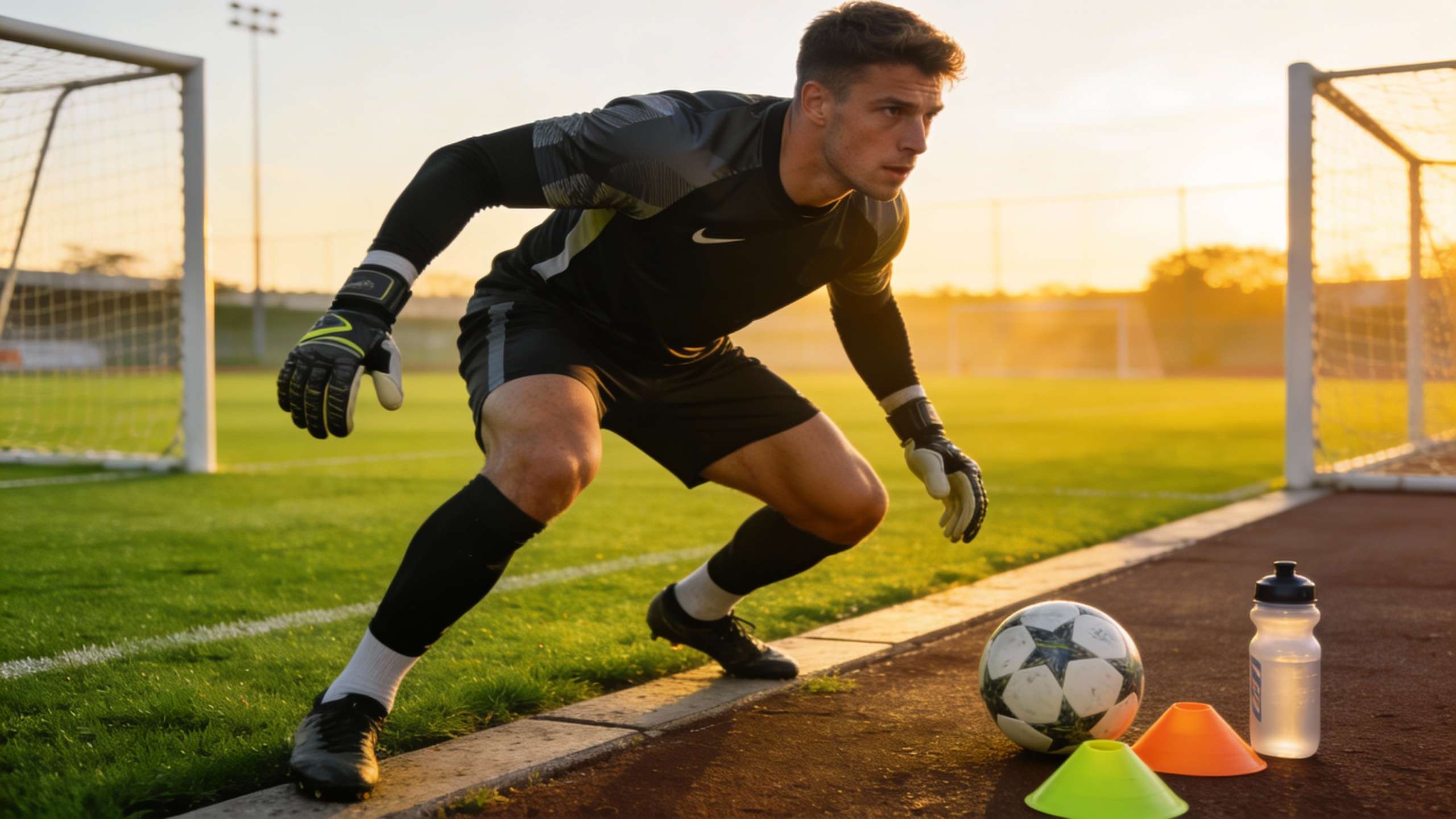
Table of Contents
Summary: A true high-performance goalkeeper training suit should feel like a second skin—stretchy, breathable, and lightly armored—so keepers can explode, dive, and recover without ever “fighting” their gear.
Define “Freedom of Movement” for a Keeper
For a goalkeeper, freedom of movement is not abstract. It’s being able to drop into a low set position, explode laterally 8–10 ft, and spring back up with zero snag, drag, or waistline slip.
Watching pro sessions and youth camps, I see the same movement pattern: micro-steps, full‑stretch dives, knee slides, and rapid recoveries. Any training suit we design has to support that full cycle, not just look fast on a mannequin.
So the design brief is simple: the suit must stretch, breathe, and protect like a motocross kit tuned for repeat impacts—but weigh and feel like a lightweight running layer.

Start With Performance Fabrics, Not Graphics
Performance begins at fiber level. Research from Discovery Fabrics, Gazelle Sports, and Cosmo Sourcing is clear: modern synthetics outlast and outperform heavy cotton when sweat and abrasion ramp up.
For a keeper suit, I’d spec a primary shell in a nylon or polyester blend with roughly 15–25% spandex. Nylon brings abrasion resistance for turf slides; polyester brings fast drying; spandex gives that crucial multi‑direction stretch.
Non‑negotiable fabric specs:
- Lightweight knit that wicks sweat fast and dries quickly so the suit never feels waterlogged
- Four‑way stretch through torso, hips, and knees for unblocked dives, splits, and recoveries
- Breathable mesh zones (back, underarms, behind knees) to dump heat in 90°F summer sessions
- Optional DWR-style finish on high-impact areas to reduce turf burn and stain buildup
Polyester–spandex blends already dominate high-mobility tops, as highlighted by Arizona’s polyester–spandex data, and they translate perfectly into a keeper-specific chassis.

Map Stretch, Compression, and Airflow by Zone
UConn’s compression-suit research shows that smart, targeted compression improves stability and speeds recovery without locking athletes up. The goalkeeper version is a zoned map—different behavior in different panels.
Around hips, glutes, and thighs, I’d use light compression to stabilize muscles during repeated dives and jumps, similar to what T1TAN and Storelli do in their padded pants and sliders. Over knees, groin, and shoulders, the fabric needs maximum stretch and zero hard seams to avoid any “brake” during full-extension saves.
Think of three key zones:
- Power zones: thighs, glutes, core—light compression for stability and reduced muscle oscillation
- Mobility zones: shoulders, hips, knees—ultra-stretch panels and articulated patterning for big ranges of motion
- Heat zones: spine, underarms, back of knees—open-knit mesh to keep airflow moving in long blocks of training
The result is a suit that feels supportive where you load force, but disappears where you need to fly.

Use Smarter Padding, Not More Padding
Storelli and Vizari both emphasize that modern padding must protect without turning the keeper into a foam mattress. Advanced foams can absorb around 90% of impact while staying thin and flexible, so we should treat them as scalpel, not sledgehammer.
I’d design:
- Low-profile hip and outer-thigh pads integrated into ¾ pants or tights for sliding and landing
- Slim, segmented elbow pads bonded into the sleeves—enough to stop turf burn, not enough to stiffen the joint
- Optional knee shells with pre-curved shaping for keepers who train heavily on hard or artificial surfaces
All padding should be perforated and backed with wicking liner fabric so those zones stay dry and bend smoothly with the joint.

Test Like a Race Suit, Not a Tracksuit
Once the suit is built on paper, you have to stress-test it like a race kit, not casual warm-up wear.
On-field test checklist:
- 20–30 full-extension dives each side: no waistband slip, no torso twist, no restricted reach
- Rapid up-down sets (set position → dive → recover) for several minutes: no hot spots or chafing lines
- Wet-session trial with hose or rain: fabric should stay light, warm enough, and grippy at impact zones
In my work with keepers, the best feedback is simple: “I forgot I was wearing it.” If the training suit delivers that—while still giving targeted protection—it unlocks exactly what Kawasaki performance gear is built for: fearless, repeatable, all-out effort, from first rep to last whistle.

References
- https://dev.housing.arizona.edu/polyester-and-spandex-t-shirts
- https://today.uconn.edu/2011/06/compression-suits-provide-competitive-advantage/
- https://www.keepersport.net/keeperzone/keepitall-blog/keepersport-regskin-high-tech-material-for-the-goalkeeper-training.html
- https://www.dmksports.com/goalkeeper-training-equipment-guide
- https://www.healysport.com/a-top-picks-for-football-training-wear-enhance-your-performance-on-the-field.html
RELATED ARTICLES



Ready to start your sportswear brand?
Get a free quote for custom sportswear manufacturing with no minimum order quantity.